The Earls of Derwentwater and Dilston: Corbridge's Jacobite Story
How the Radclyffe family came to Dilston, rose to an earldom in 1688 and lost everything in the Jacobite risings: the execution of James, 3rd Earl of Derwentwater, the Derwentwater Lights legend, his brother Charles, and what survives at Dilston today.
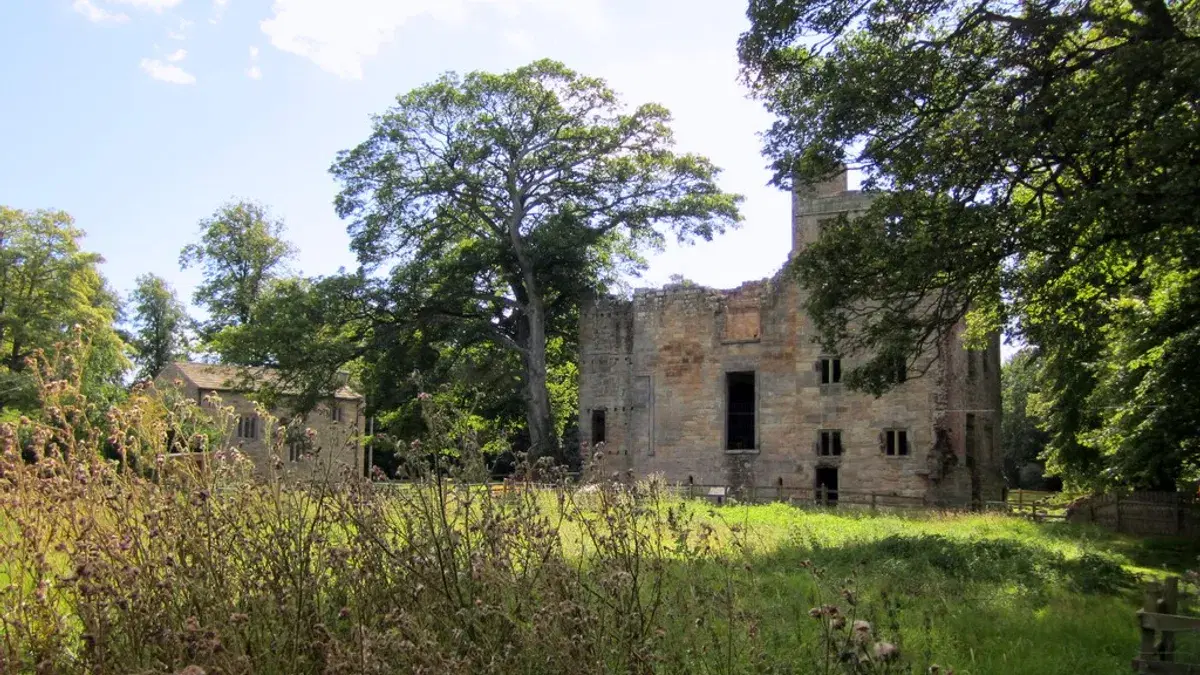
Across the Tyne from Corbridge, on a wooded bank above the Devil's Water, stand a roofless stone tower and a small chapel. They are almost all that is left of Dilston, the Northumberland seat of the Radclyffe family, Earls of Derwentwater. In the space of a single generation the family went from the favour of a king to the scaffold on Tower Hill, and the story of the last Earl, James Radclyffe, has been told in ballads, novels and Tyne Valley folklore ever since.
This long read follows the family from their arrival at Dilston to the confiscation of their estates, and finishes with what you can (and cannot) see at Dilston today. Where the sources disagree, we say so, and we have flagged the legends as legends. Our shorter profile of the 3rd Earl is in famous people from Corbridge.
Dilston before the Radclyffes
Dilston sits about a mile south-west of Corbridge, on an escarpment above the point where the Devil's Water runs down to join the Tyne. The name is generally taken to come from the river: Northumberland County Council's historic environment record, Keys to the Past, notes that the manor was said to belong to a family called Divelston from the 13th century, although nothing visible survives from that period.
The building that survives is later. According to Keys to the Past, Sir William Claxton acquired the manor in 1417, and his family probably built the three-storey tower house in the early to middle part of the 15th century, adding a turret later in that century. It was a typical Northumberland response to the long wars with Scotland: a strong, stone-vaulted tower in which a landowning family could sit out a raid. (For the wider story of raids and pele towers around Corbridge, see our long read on Corbridge as a frontier town.)
How the Radclyffes came to Dilston
The Radclyffes were a Cumberland family, taking their later title from their lands at Derwentwater in the Lake District. They came to Dilston by marriage, but the sources do not agree on when.
Keys to the Past says the estate passed to the Radclyffes in the late 15th century, which fits the account given in Wikipedia's article on Cartington, the family's other Northumberland manor: after John de Cartington died in 1494, his heiress's lands passed to Sir Edward Radcliffe by marriage. Wikipedia's article on Dilston Castle, by contrast, gives 1621 for the marriage that brought Dilston to the family. The earlier date is better supported by the county record, and the family was certainly building at Dilston well before 1621, so we treat the late 15th century as the more likely.
What is clear is that the Radclyffes made Dilston their principal home. Keys to the Past records that Sir George Radcliffe (1545 to 1588) added a four-storey extension and remodelled the tower. In the early 17th century Sir Francis Radclyffe went further, building a new manor house, Dilston Hall, against the old tower, together with a private chapel and a forecourt gateway. A stone over the gateway carries the initials of Sir Francis and his wife and the date 1616. Tree-ring dating carried out in 2003 found that timbers in the chapel and tower were felled around 1611, consistent with that date. (Sources give 1616 or 1622 for the hall itself.)
The chapel mattered. The Radclyffes were Catholics, at a time when Catholic worship was illegal in England, and a private chapel on a remote family estate was one way of keeping the faith. Wikipedia's article on Dilston Castle records that four of the Radclyffe children of this period were in a convent abroad.
From baronets to earls
Sir Francis was made a baronet in 1620. His grandson, also Sir Francis, the 3rd baronet (1625 to 1697), reached the top of the ladder. In 1688, James II, Britain's last Catholic king, created him Earl of Derwentwater, Viscount Radclyffe and Langley, and Baron Tyndale. The timing proved unlucky. Before the year was out James II had been driven from the throne in the Glorious Revolution, and the Radclyffes found themselves a Catholic family raised to the peerage by a king now living in exile in France.
The 1st Earl's son Edward, who became the 2nd Earl in 1697, tied the family even more closely to the Stuarts. He married Lady Mary Tudor, a natural daughter of Charles II by the actress Moll Davis. Their eldest son, James, was therefore a grandson of Charles II and a cousin of the exiled Stuart prince.
James Radclyffe, 3rd Earl
James Radclyffe was born on 26 June 1689, at Dilston according to most accounts. He was brought up at the exiled Stuart court at Saint-Germain, near Paris, as a companion to the young James Francis Edward Stuart, the son of James II, whom the Jacobites recognised as King James III and his opponents called the Old Pretender.
James succeeded his father as 3rd Earl in 1705. After some years on the Continent he came to England around 1709 to 1710 and took up his estates in Cumberland and Northumberland. He married Anna Maria Webb on 10 July 1712, and he set about replacing the old house at Dilston with something grander. Keys to the Past records that around 1710 he pulled down the Elizabethan and Jacobean house and began a new mansion. It was never finished.
By the accounts that survive, the young Earl was well liked in the Tyne Valley: rich, generous and personally popular. That popularity is part of why his fate made such an impression locally.
The 1715 rising
When George I succeeded Queen Anne in 1714, the Jacobites saw their chance to restore the Stuarts. In the autumn of 1715 the Earl of Mar raised the Stuart standard in Scotland, and in Northumberland a rising gathered under Thomas Forster, the Tory MP for the county.
Derwentwater was already under suspicion; the government had issued a warrant for his arrest, and he went into hiding. In early October 1715 he came out openly for James III and rode to join Forster with a small company from Dilston, at most about 70 servants, tenants and friends according to Wikipedia's biography, under the direct command of his younger brother Charles. Accounts of the next few days differ in detail, but the rebels moved through Rothbury to Warkworth, where James III was proclaimed king, before heading north to join forces with Jacobites from the Scottish Borders.
The combined force then turned south into Lancashire, hoping to raise the Catholic gentry there. Instead it was trapped in Preston by government troops. After two days of fighting, the Jacobite army surrendered on 14 November 1715, the same day the rising in Scotland stalled at Sheriffmuir. Derwentwater and his brother were among the prisoners.
Trial and execution
The Earl was taken to London and held in the Tower. The History of Parliament's biography sets out the legal steps. He was impeached for high treason with five other peers on 9 January 1716, and on 19 January he pleaded guilty, arguing in mitigation that he had no part in planning the rising and had come out without arms. He was condemned to death in Westminster Hall on 9 February.
There was real sympathy for him. His wife petitioned George I in person, and on 22 February the House of Lords voted, after debate, to petition the king for a reprieve. The king refused the next day. On 24 February 1716 James Radclyffe was beheaded on Tower Hill, at the age of 26. Viscount Kenmure was executed the same day; the Earl of Nithsdale, condemned with them, had escaped from the Tower the night before in his wife's clothes.
On the scaffold, Derwentwater took back his guilty plea, declared himself a Catholic and affirmed his loyalty to James III as rightful king. His heart was reportedly taken to an English convent in Paris. His body was brought back north and buried in the family vault at Dilston.
The Derwentwater Lights (a legend)
The best-known story about the Earl is a piece of folklore, not history. The northern lights were unusually brilliant in the weeks after his death, and in the North of England the aurora became known as "Lord Derwentwater's Lights", a sign, depending on who told the story, of heaven's anger at his execution or of his welcome into it.
There really was a remarkable aurora in early 1716. Edmond Halley, the astronomer, wrote it up for the Royal Society, and JSTOR Daily's account of the "battles in the sky" seen that spring dates the great display to 6 March 1716, some days after the execution. Other writers, including a note in Nature in 1870, linked the name to the night of the execution itself. Either way, the connection to the Earl belongs to legend. A second local tradition holds that the Devil's Water below Dilston ran red with blood on the day he died, or on its anniversary; that too is folklore.
The Earl also lives on in song. "Lord Derwentwater" is one of the traditional ballads collected by Francis Child (number 208), and "Derwentwater's Farewell" is often presented as a traditional Northumbrian song, although Wikipedia notes it is attributed to the antiquary Robert Surtees, who was known for inventing "traditional" ballads. Anya Seton's 1962 novel Devil Water tells the family's story in fiction.
Charles Radclyffe: escape and a second execution
The Earl's younger brother, Charles Radclyffe, was born on 3 September 1693. He was captured at Preston with James, found guilty of treason and sentenced to death. But in December 1716, according to Wikipedia's biography, he escaped from Newgate prison with 13 other prisoners when a door was left open, and made his way to France.
Charles spent the next three decades in exile, much of it in Rome around the Stuart court, where he served for a time as secretary to Charles Edward Stuart, Bonnie Prince Charlie. He styled himself Earl of Derwentwater after the death of his nephew John in 1731, although the title had been forfeited.
In November 1745, as the second great Jacobite rising was under way, Charles and his son James sailed from Dunkirk to join it. Their ship was captured at sea by HMS Sheerness. The government did not need a new trial: Charles was still under the sentence passed in 1716. He was beheaded on Tower Hill on 8 December 1746, thirty years after his brother.
The forfeited estates and Greenwich Hospital
The Earl's estates were at first claimed by the Crown, but the History of Parliament records that his family won a lawsuit allowing his young son John to keep them. When John died unmarried in 1731, still in his teens, Parliament stepped in. A series of Acts in the early 1730s secured the estates for the Crown and barred the foreign-born children of convicted traitors from inheriting, which shut out Charles's family. In the mid-1730s the income from the estates was assigned to the Royal Hospital for Seamen at Greenwich. Sources give dates for the Greenwich grant ranging from 1734 to 1748, depending on which Act or grant they count. Charles's son later accepted a payment of about £30,000 to drop the family's claims.
Under Greenwich Hospital, Dilston declined. The Earl's unfinished mansion was used for a time by the Hospital's local steward, but it deteriorated, and in 1765 the Hospital's commissioners ordered it demolished. Only the old tower and the 1616 chapel were left. Some of the stone went into building work in Corbridge: the Golden Lion on Hill Street says it was built in the mid 18th century with stone from Dilston Hall. Our guide to the lost buildings of Corbridge covers the hall's demolition in more detail.
The Earl did not rest undisturbed. Keys to the Past records that in 1805 the commissioners opened the family vault and found his embalmed body and head. In 1874 the vault was cleared, and according to the Dictionary of National Biography the remains of the first three Earls were reburied on 9 October 1874 in the Petre family vault at Thorndon in Essex (the 3rd Earl's daughter Mary had married the 8th Baron Petre). One newspaper account of the time says some family members were reburied at Hexham instead, so the details are not entirely settled.
Greenwich, the Greys and the Beaumonts
Greenwich Hospital's estate management brought a notable family to Dilston. In 1833 John Grey, a leading agriculturist, was appointed to manage the Hospital's northern estates and moved with his family to Dilston. His daughter, Josephine Butler, who became one of the best-known social reformers of the Victorian age, grew up there.
The Greenwich Hospital Act of 1865 transferred the estates to the Admiralty, which sold Dilston to Wentworth Blackett Beaumont, later the 1st Baron Allendale. Keys to the Past records that the Allendales carried out repairs to the tower in the Victorian and Edwardian periods, consolidating it as a picturesque ruin.
Dilston today
The tower known as Dilston Castle and the chapel beside it are both listed at Grade I and are scheduled monuments. Restoration began in 2001, with Heritage Lottery Fund support, and included a new roof, a rebuilt upper floor and a new staircase in the tower. Excavations at the same time located the remains of the demolished hall and its 17th-century service range, and in 2004 funding was awarded towards repairing the early 17th-century Lord's Bridge near the castle.
The castle and chapel stand in the grounds of Dilston College, a specialist further education college for young people with learning disabilities. The college was founded in 1971 and was for many years Mencap's National College Dilston; in 2014 Mencap sold it to the Cambian Group, and it is now Cambian Dilston College. The present house called Dilston Hall is part of the college, not the Earl's mansion.
Can you visit?
Not as a matter of routine. The castle and chapel are on private college land, and there are no regular opening hours. In past years they have been opened occasionally, for example by appointment in 2016 according to the Hexham Courant, and the Friends of Historic Dilston have run guided visits. We could not confirm any dates for 2026 or 2027, and the Friends' website was not responding when we checked. If you want to see inside, watch for Heritage Open Days in September and local announcements, and please do not walk into the college grounds uninvited.
What you can visit nearby
Dilston Physic Garden, a short distance away, is the easiest way to spend time at Dilston. It is a charity-run science garden growing over 700 plants with histories in medicine and healing, open Wednesday to Sunday from April to October and on shorter weekend hours in late autumn and early spring (it closes from 21 December to 4 February). The walk from Corbridge over the 1674 bridge and along the floodbank towards Dilston is described in our guide to walks around Corbridge.
Back in the village, St Andrew's Church and the Golden Lion are both on our Corbridge heritage walking trail, and Corbridge Roman Town is half a mile west of the village for a much older layer of the story.
Best for:
Dilston Castle and its chapel are on private land and are not open on a regular basis. Dilston Physic Garden has its own opening hours, which change through the year, so check its website before you travel.
Sources and further reading
- Keys to the Past (Northumberland HER), Dilston Castle, record N8985: dates for the Claxtons, the Radclyffe building phases, the 1616 gateway stone, tree-ring dating, demolition and the 1805 vault opening.
- History of Parliament, House of Lords biography of James Radclyffe (1689 to 1716): impeachment, trial, execution and the fate of the estates.
- Wikipedia articles on Dilston Castle, James Radclyffe, 3rd Earl of Derwentwater, Charles Radclyffe, the Earl of Derwentwater and Cartington, used for leads and cross-checked where possible.
- Dictionary of National Biography, volume 47 (1896), on the 1874 reburial at Thorndon.
- JSTOR Daily, "When the English witnessed battles in the sky", on the aurora of March 1716.
- Ofsted and Cambian Group material on Cambian Dilston College.
Know more about access to Dilston Castle, or have an old photograph of the chapel? Get in touch.
Local businesses mentioned
Dilston Physic Garden
Dilston Physic Garden, Corbridge, Northumberland, NE45 5QZ
The Golden Lion
Hill Street, Corbridge, Northumberland, NE45 5AA
St Andrew's Church, Corbridge
St Andrew's Church, Market Place, Corbridge, Northumberland, NE45 5AA
Corbridge Roman Town
Corchester Lane, Corbridge, Northumberland, NE45 5NT
Never miss what’s on
Join the weekly CorbridgeVillage.live digest — the best events, news and local tips, straight to your inbox. One email a week.
What's On
Jim Ross Interviewed by LJ Ross
See organiser · Corbridge Community Hub, 19 Princes Street, Corbridge
Tynedale v Chester (National League 2 North)
2:00 PM · Tynedale Park, Station Road, Corbridge NE45 5AY
Remembrance Sunday Civic Service
10:40 AM · St Andrew's Church, Market Place, Corbridge NE45 5AA