Photography Spots in Corbridge
Where to take photos in Corbridge: the 1674 bridge from the riverbank, the floodbank, St Andrew's Church and lychgate, the Vicar's Pele, the market crosses, Low Hall, the Roman Town and Aydon Castle, with timing tips.
Corbridge packs a lot into a small village: a seven-arched 17th-century bridge, two medieval tower houses, a Saxon church with a Roman arch and a Roman town where you can walk the original street. Most of the best viewpoints are within ten minutes' walk of the Market Place, and the light along the Tyne is often at its best early and late in the day. This guide lists the spots worth carrying a camera to, roughly in the order of a walk from the river into the village.
Please be considerate. Many of Corbridge's oldest buildings are private homes, so photograph them from the street and don't fly drones over houses or the churchyard.
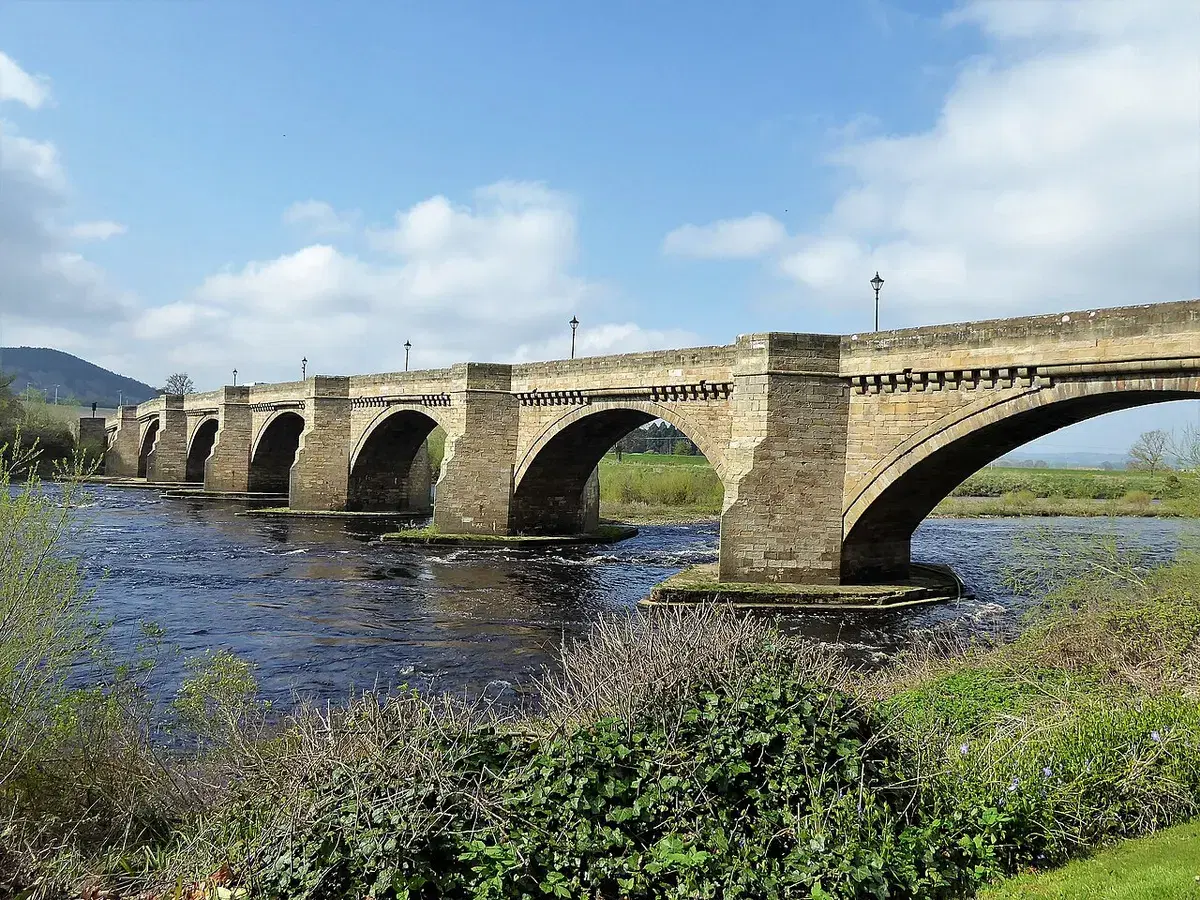
Corbridge Bridge from the riverbank
The bridge is the classic Corbridge photograph. Built in 1674, it has seven arches with triangular cutwaters between them and is listed at Grade I. Historic England calls it "the only bridge in Tynedale to survive" the great flood of 1771.
The best angles are from the banks rather than on the bridge itself. From the south bank, near the station end, you can line up all seven arches against the village behind. From the north bank, the arches sit against the fields and hills south of the river. In low summer water, gravel beaches appear below the arches, giving you a lower viewpoint. Keep well back from the edge when the Tyne is high.
Best for: Seven arches and a 350-year-old survivor of the great flood.
The floodbank towards the Devil's Water
From the south end of the bridge, a path runs along the floodbank beside the Tyne towards the Devil's Water. It gives open views back to the bridge and the village, wide skies over the river meadows and, in winter, mist on the water early in the morning. Our walks around Corbridge guide describes the route. Avoid it when the river is in flood.
St Andrew's Church and the lychgate
St Andrew's Church is one of the oldest churches in Northumberland, and its tower arch is built from reused Roman stone. Outside, look for the lychgate at the churchyard entrance, the village's First World War memorial, dated 1920. It frames the church path well. Just outside the churchyard wall, west of the tower, is the King's Oven, a communal bread oven first recorded in 1310.
The church is a place of worship, so ask before you photograph inside, and don't photograph during services.
Best for: Saxon stone, a Roman arch and a memorial gateway in one churchyard.
The Vicar's Pele
Beside the churchyard stands the Vicar's Pele, a fortified tower built around 1300 for the vicar of Corbridge, when Scottish raids were a real threat. It is listed at Grade I and is a scheduled monument. The plain, square tower photographs well against a clear sky. It now houses the Pele, a micro bar, so you can go inside from Thursday to Sunday.
The Market Place and its crosses
The Market Place has two crosses. In the middle stands the Market Cross of 1814, with an unusual cast iron shaft on a stepped stone base, sometimes called the Percy Cross. The older cross, with a medieval shaft, now stands against the churchyard wall near the Vicar's Pele. The stone buildings around the square photograph best on a quiet morning, before the shops open and cars fill the square.
Low Hall and the pant on Main Street
At the eastern edge of the old village, Low Hall is listed at Grade I and is often described as the oldest house in Corbridge. It began as a hall house in the late 13th or early 14th century, and a defensive pele tower was added later. It is a private home, so photograph it from Main Street only.
On the way back west, look for the stone pant, an early 19th-century public drinking fountain that once brought spring water to the village.
Hill Street and the Town Hall
The Town Hall of 1887 faces the Golden Lion on the corner of Hill Street and Princes Street. Stand back along Hill Street to get its frontage and the surrounding stone terraces in the same frame. Our heritage walking trail links all of these village-centre stops into one loop.
Corbridge Roman Town
At Corbridge Roman Town you can walk along the original Roman main street, past the granaries, the town fountain and the foundations of the town's buildings. Low winter sun picks out the stonework well. The site is run by English Heritage and is open at weekends only through the winter, from 10am to 4pm. The museum holds the Corbridge Hoard and the Corbridge Lion. Check English Heritage's rules on photography and tripods before you go. See our Roman Town visitor guide.
Best for: The most northerly town in the Roman Empire, with its main street still underfoot.
Aydon Castle
In the countryside north-east of the village, Aydon Castle is a 13th-century fortified manor house run by English Heritage. It is closed for the winter and reopens in 2027, so you can't go inside, but walkers' reports describe public paths passing near it on the Corbridge to Aydon circular walk. Stay on the rights of way and check English Heritage's website for the current position before you set out.
Dilston Physic Garden
Just south-west of the village, Dilston Physic Garden grows more than 700 plants with histories in health and medicine, and it is good for close-up and plant photography. Its winter opening is Friday to Sunday from 12pm to 3pm until 20 December, then it closes until 5 February. From April to October it opens from Wednesday to Sunday.
Tips for photographing Corbridge
- Time of day. The bridge runs north to south, so its arches catch side light early and late in the day. The Market Place is quietest early in the morning.
- Weather. Mist often hangs over the Tyne on still autumn and winter mornings. After heavy rain, the river runs high and brown, and the floodbank may be closed.
- Getting there. Corbridge station is at the south end of the bridge, so you can take the Tyne Valley line and start shooting as soon as you arrive. See our parking guide if you're driving.
- Respect privacy. Low Hall, the houses on the Market Place and most of the village's old buildings are lived in. Photograph them from public places.
Got a favourite Corbridge viewpoint we've missed? Get in touch and we'll consider adding it.
Local businesses mentioned
St Andrew's Church, Corbridge
St Andrew's Church, Market Place, Corbridge, Northumberland, NE45 5AA
Corbridge Roman Town
Corchester Lane, Corbridge, Northumberland, NE45 5NT
The Pele
Market Place, Corbridge, Northumberland, NE45 5AW
Dilston Physic Garden
Dilston Physic Garden, Corbridge, Northumberland, NE45 5QZ
Never miss what’s on
Join the weekly CorbridgeVillage.live digest — the best events, news and local tips, straight to your inbox. One email a week.
What's On
Jim Ross Interviewed by LJ Ross
See organiser · Corbridge Community Hub, 19 Princes Street, Corbridge
Tynedale v Chester (National League 2 North)
2:00 PM · Tynedale Park, Station Road, Corbridge NE45 5AY
Remembrance Sunday Civic Service
10:40 AM · St Andrew's Church, Market Place, Corbridge NE45 5AA